
Language Clues: Using Language to Spot Online Scams
Course | Introductory | Module | 3
“Language shapes the way we think, and determines what we can think about.”
~ Benjamin Lee Whorf
Introduction: Finding Language Clues
In the previous article, we developed our understanding of online safety through the lens of language by learning what clues to look out for in the graphology, lexis, syntax and semantics of online scam messages. Now, we will apply this four-step approach to language analysis to an example of a fake account notice.
Example Scam: Spoofed Netflix Notification
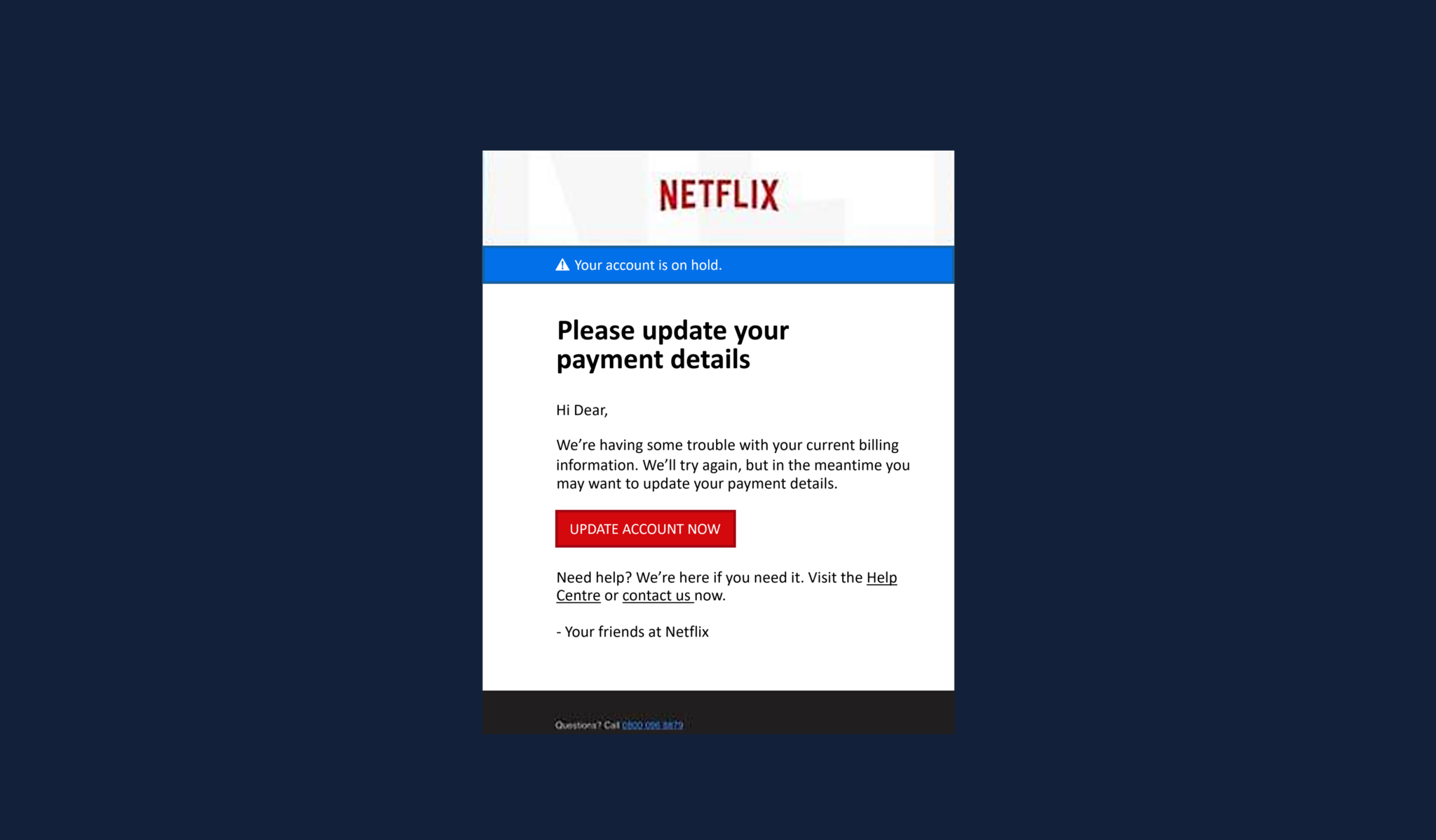
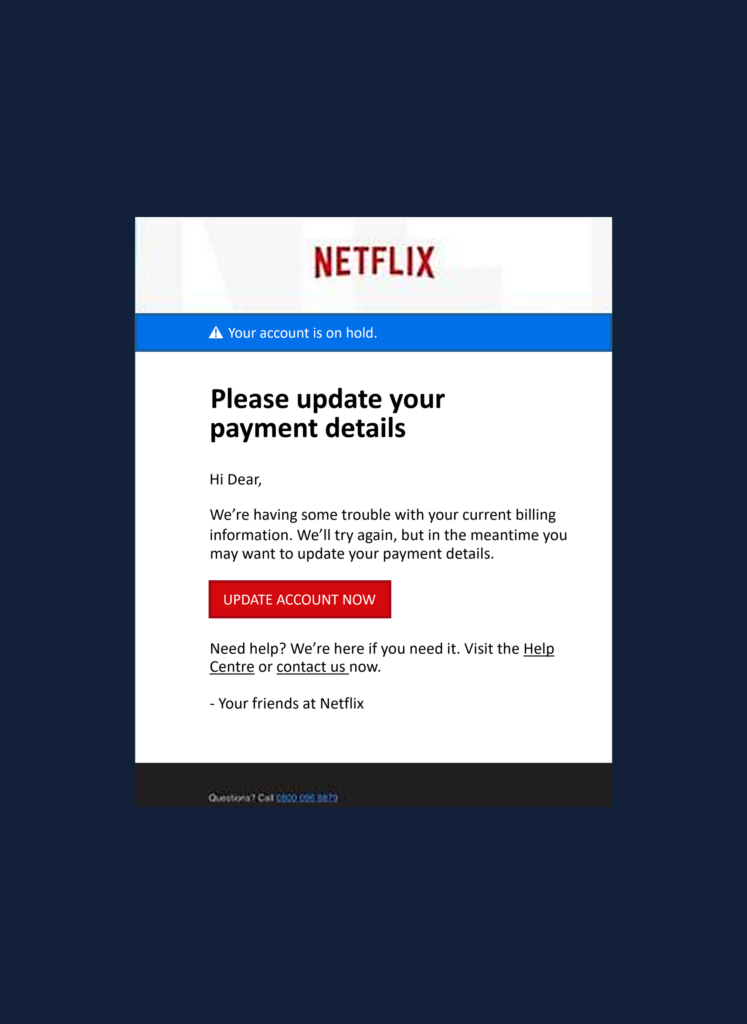
Do you enjoy watching Netflix after a busy day at school or work? How would you react if your favourite subscription service suddenly informed you that your account had been suspended?
It is more than likely that you would want to resolve the issue as quickly as possible, and this is exactly what online scams like the one shown above rely upon. Instead of taking any hasty actions, we should learn to analyse the language of a message like this carefully, and to keep an eye out for any clues that indicate it may be a scam. Below, you will find a detailed break-down of the language clues we can use to identify this example notification as a scam:
Graphology:
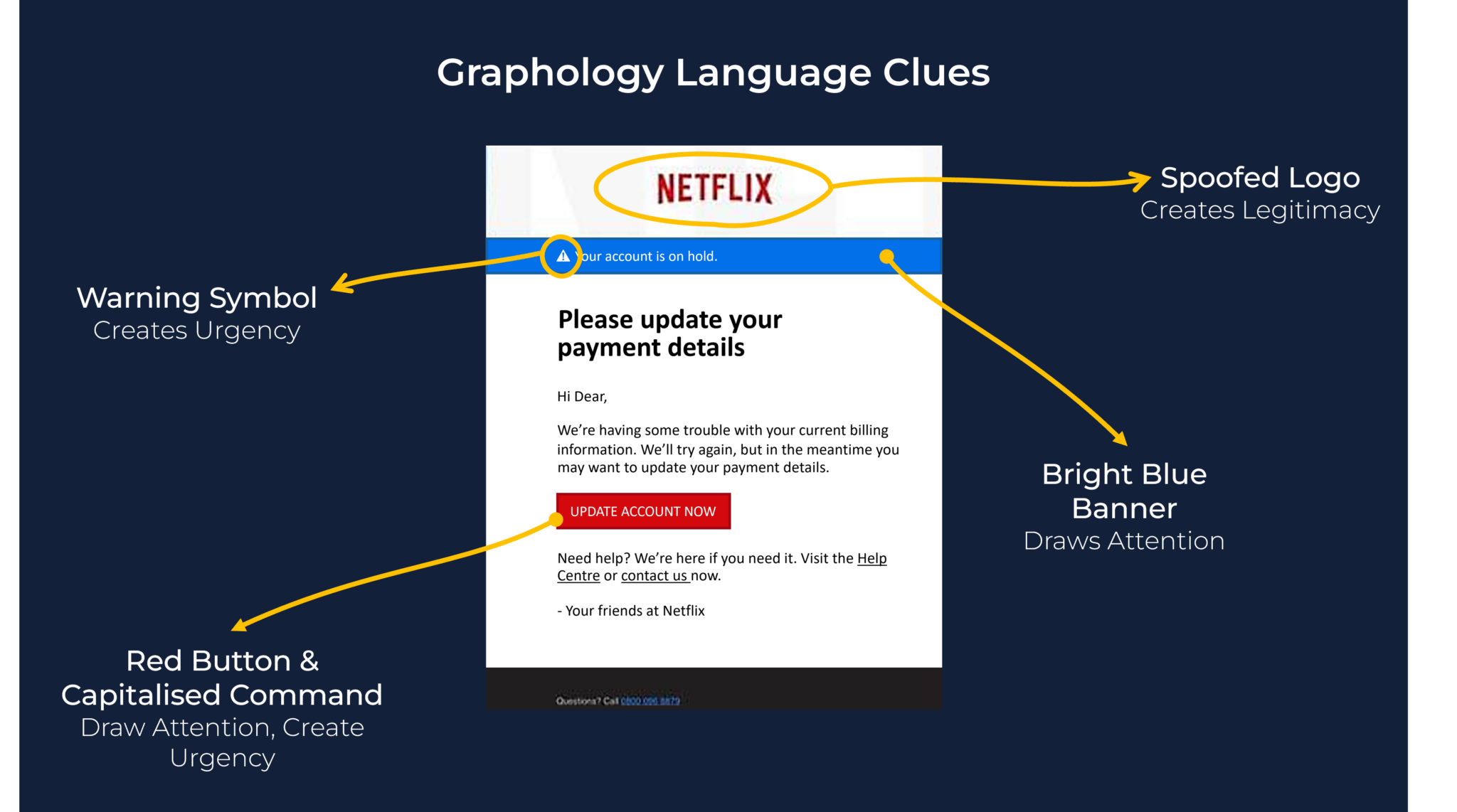
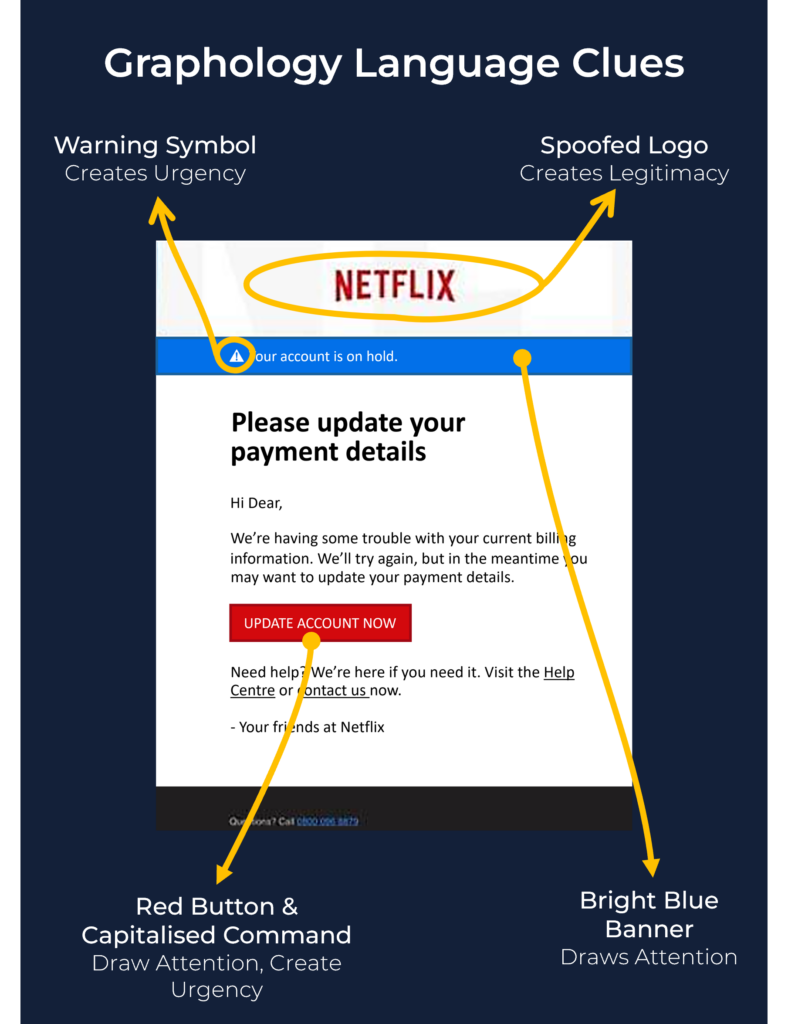
This fake Netflix notification is a common example of brand spoofing. We can see that by using the Netflix logo and colour scheme, this online scam tries to trick us into assuming the notification is real. This does not mean that there are no visual (or graphological) clues for us to spot. In fact, there are four key graphological clues which suggest that everything is not as it seems:
- 1: Bright Blue Banner: This is a telling sign, as blue is not part of the usual Netflix colour scheme. Instead, the bright blue banner acts as an attention-grabbing visual element, suggesting that it has been used to draw our attention to the claim that our account has been suspended.
- 2: Warning Sign: The white, triangular warning sign included in the banner is used to create a sense of danger and urgency. Together with the rest of the bright blue banner, this might make us feel panicked or cause us to act in a hasty manner without stopping to think about whether our account has actually been suspended.
- 3: Red Button: The bright red button at the centre of the notification is also used to grab our attention. As a colour which is commonly seen as a symbol of danger and urgency, red can make us feel forced into taking quick action.
- 4: Capitalised Command: As it contains the fully capitalised words ‘UPDATE ACCOUNT NOW’, the button at the centre of the notification not only draws our attention, but also commands us to take instant action. This should be taken as a warning sign, as online scams usually rely on pressuring us to take action before we have had a chance to stop and think about what we are doing.
Lexis:
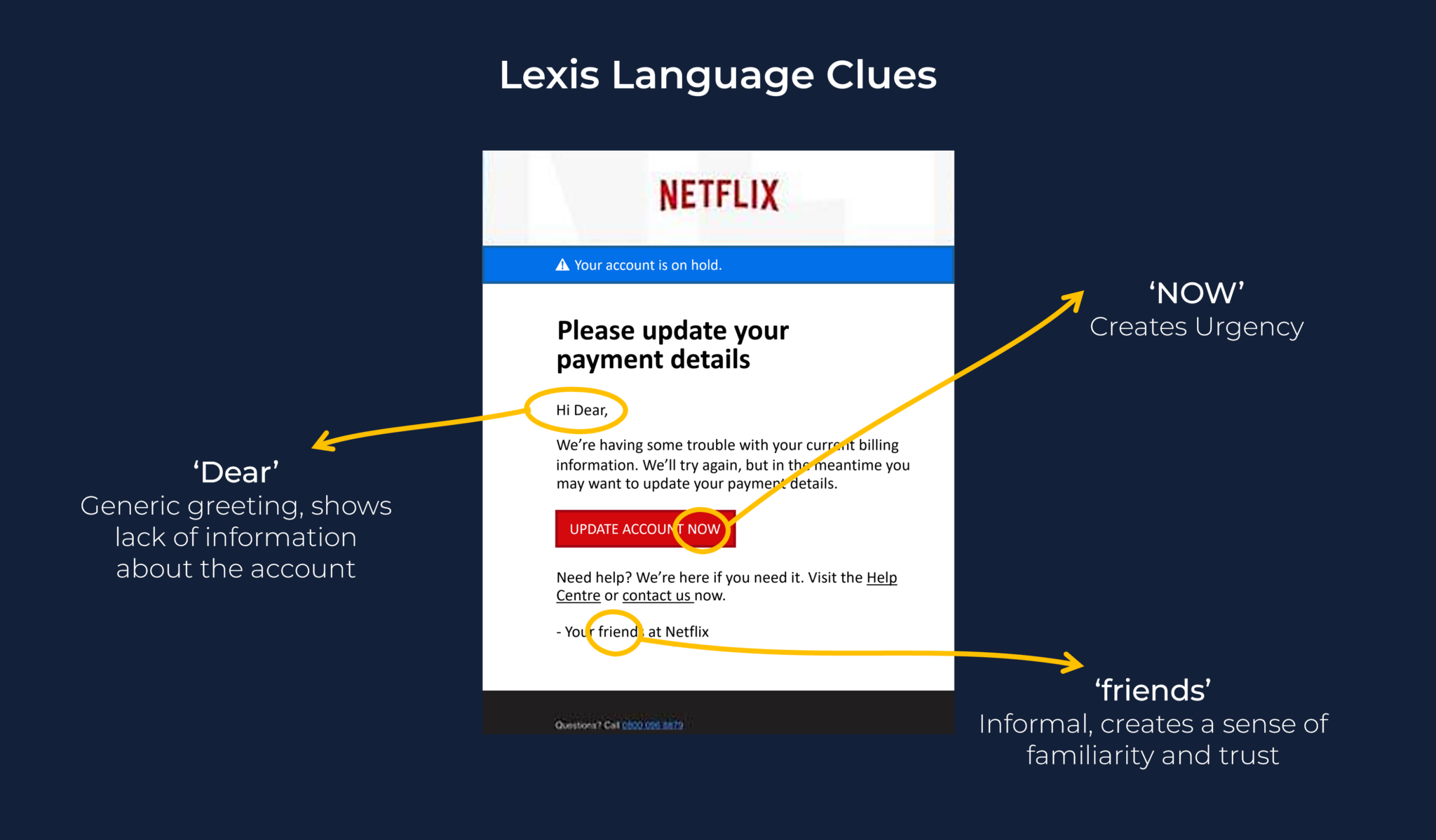
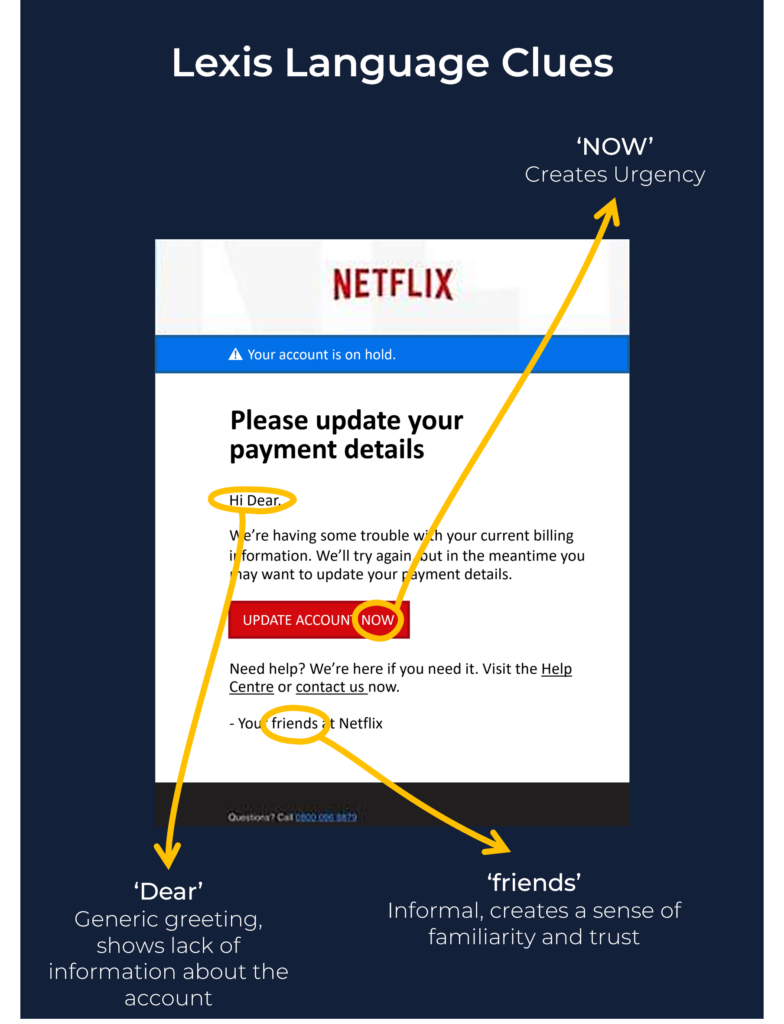
Now that we have looked at the main visual clues present in our example scam, we can move on to looking at the actual words that have been used in greater detail. There are three word-choices that stand out:
- 1: Dear: This is a very generic greeting and suggests that the sender of the notification does not actually have your name and account details.
- 2: Now: The use of the word ‘now’ is significant, as it suggests that the sender of the notification wants you to take immediate action.
- 3: Friends: By signing off as ‘Your friends at Netflix’, the sender(s) of the notification suggests that they are an ally to you. This is very unusual for large businesses and corporations like Netflix, as they would usually choose more professional vocabulary.
Syntax:
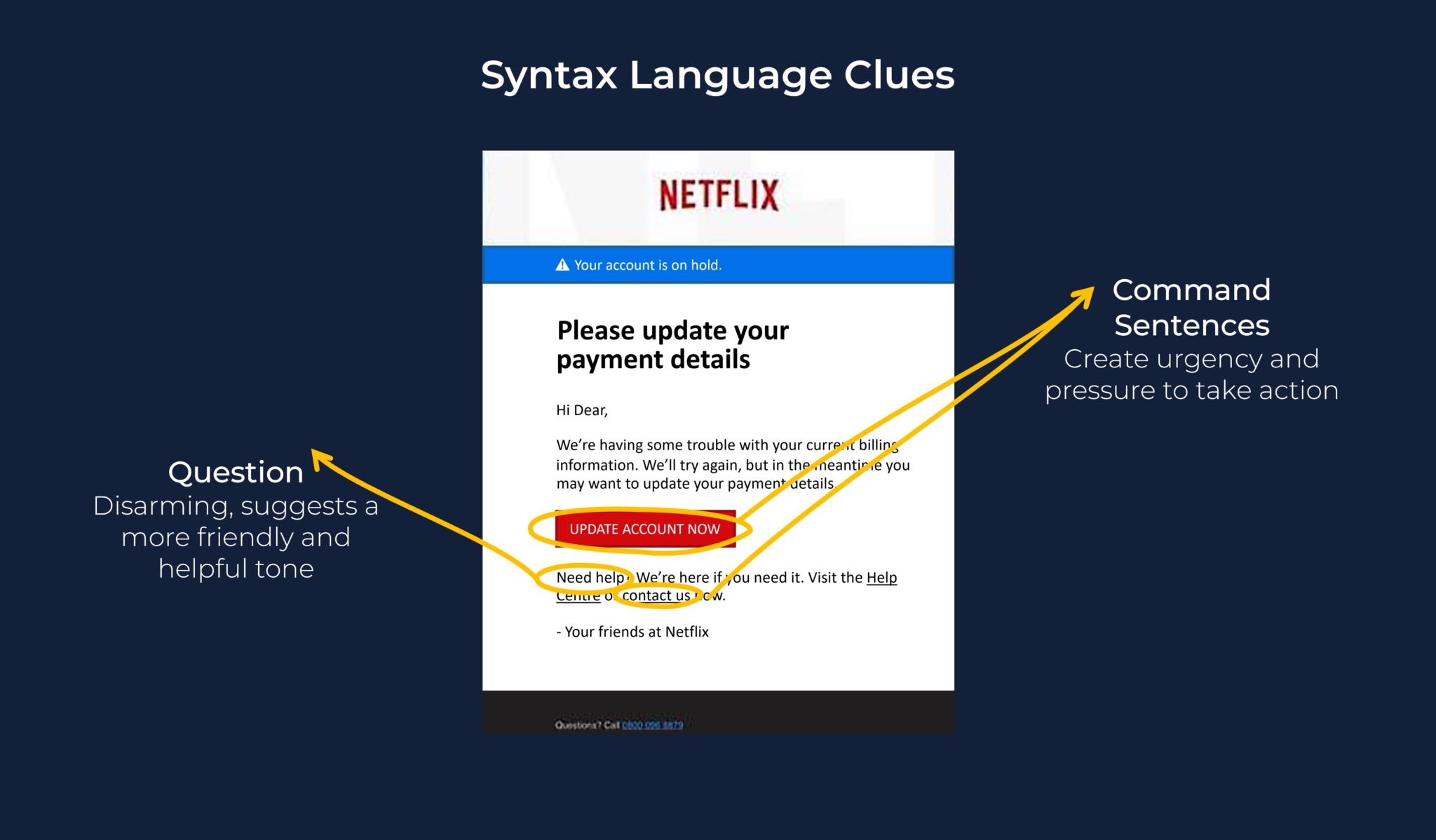
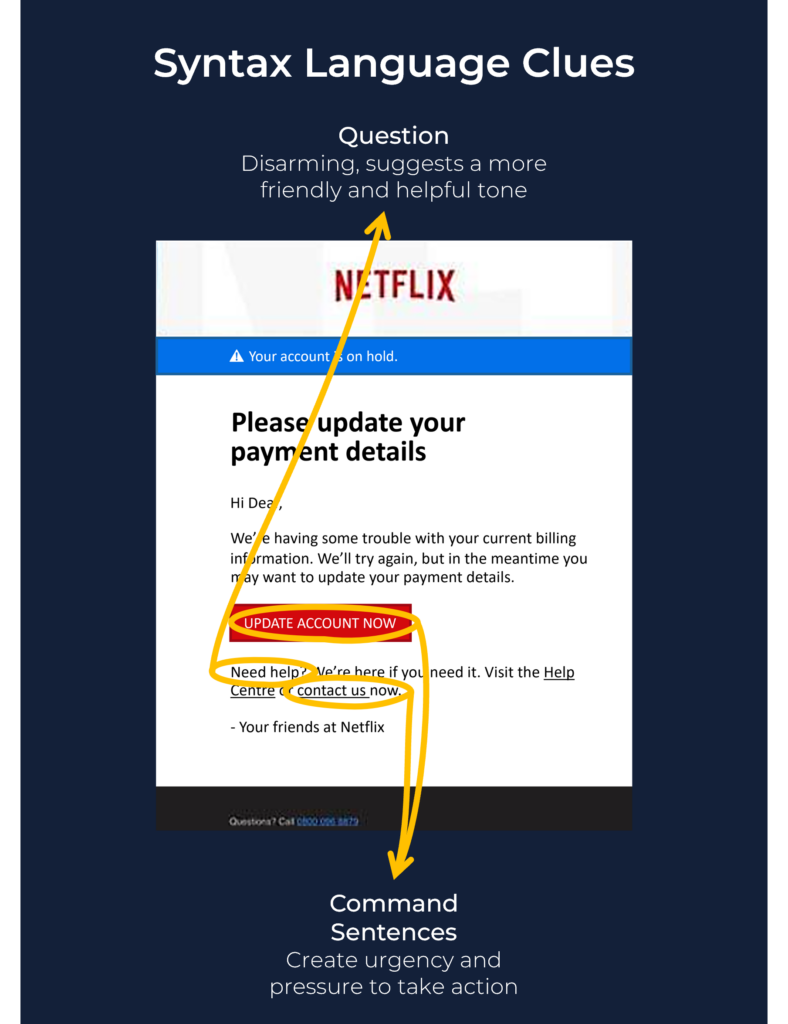
There are two interesting examples of how we can use syntax to spot online scams in this notification.
The first is the use of command (or imperative) sentences like ‘Contact us now’. This kind of sentence pressures us into taking action, like clicking on a hyperlink, without thinking. We should always be cautious when we read commands like this, as they may be trying to trick us.
The second is the use of the question ‘Need help?’ at the end of the notification. A question like this is meant to be disarming, and makes it seem like the sender of the notification is trying to help us. However, it has also become common practice for businesses to include these kinds of questions in their real communications. This is why we need to look at all the language clues available to us when making a decision about whether a message is real or fake.
Semantics:
We can get further clues about this notification by looking at how the overall word choice, style and tone of the message influence us.
In particular, the use of the word ‘now’ builds on the sense of urgency created by the visual elements of the notification. This is balanced by the use of contractions like ‘we’re’ and ‘we’ll’, as well as the word ‘friends’, which all make the sender of the notification seem more helpful and friendly to us.
It is this clever use of language that can make online scams so difficult to spot – we are pressured into taking action and revealing our personal information, while also being offered help and guidance. Only by learning to recognise the inconsistencies between the semantics of these kinds of notifications, and the actions they are trying to get us to take, can we improve our ability to spot online scams.
Conclusion:
Over the course of this article, we have explored how we can use our knowledge of language analysis to spot online scams and improve our online safety. We have also analysed the elements of graphology, lexis, syntax and semantics in an example of an online scam to demonstrate how we can identify and use language clues to our advantage. In the next article, we will learn more about how we think and act online as we discover some of the basic psychology behind our online behaviour.